
 Login / Register


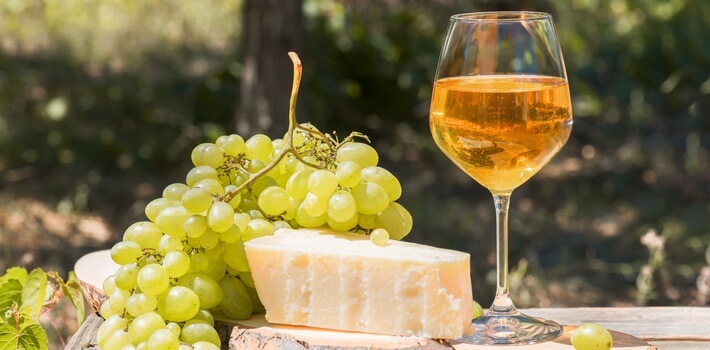
Tap into the growing popularity of amber/natural wines
What exactly is orange wine?
In simple terms, it’s a white wine made like a red wine in that the grape juice is left in contact with the skins… with no citrus fruit harmed in the process!
Also known as skin-contact white wine, white grapes are vinified in a similar way to making red wine, so the fermenting juice spends time macerating in contact with the grape skins. Skin contact is another term for maceration, or the period during winemaking when the grape skins remain in contact with the juice. Reds and some rosés also get their colour from maceration, though most red wines are made by fermenting grapes with their skins for the entire period of alcoholic fermentation: although there are exceptions, whereby the juice is separated earlier to create a lighter taste or less body. Rosés usually spend less than 12 hours macerating on their skins before the juice is pressed off and fermentation is allowed to finish, though some can rest on their skins for up to a week.
When people talk about skin-contact wines, they usually refer to white grapes that are vinified like red wines. Most white wines are made by pressing grapes after harvest, and only the resulting juice is fermented. But even with white grapes, if you let the juice ferment on the skins, it extracts additional tannin, texture and flavour, just like in red wines. The wines become darker in colour too, hence why they’re often referred to as orange wine AKA amber wine and can range in colour from pale amber to deep orange.
New kid on the block?
Despite being the fastest growing segment of the wine world and increasingly ‘en vogue’ with wine enthusiasts, orange wine is one of the oldest winemaking styles, the method dating back thousands of years with origins in Georgia where the preferred term is amber wine. It was revived in the 1990s by a pair of cult northeastern Italian winemakers inspired by the ancient technique of traditional winemaking used in the region, allowing white grapes to ferment on their skins, undisturbed in clay vessels called qvevri. They began to produce skin-contact wines, known there as ramato (translating to copper coloured), leading to a new era of experimentation throughout the region which developed and expended around the world.
As recently as a decade ago, these distinctive wines were considered a fad, but with people eager to try new styles of wine they have become firmly embedded as a fourth wine colour. Growth is no doubt driven by consumers who crave the authenticity of wines with a story, minimal intervention winemaking and sustainability in line with organic trends; chemical free wines are a major growth driver.
Consumers increasingly desire natural wines with artisanal production, often involving less intervention, with many skin-contact wines being bottled with visible sediment or even appearing cloudy. So, while nothing fundamentally dictates a skin-contact wine be “natural” (a word that carries multiple interpretations), they do tend to fall somewhere on the natural wine spectrum.
The use of skin and low intervention winemaking in white wines has become more common throughout the world, the style no longer limited to Eastern Europe or parts of Italy. American
The use of skin contact and low intervention winemaking in white wines has become more common throughout the world, the style no longer limited to Eastern Europe or parts of Italy. Western European and American producers have become well known for making wines in this style, while counterparts from Chile, South Africa and Australia are also achieving acclaim.
As winemakers continue to experiment with new grapes and seek innovative ways to showcase them, a period of maceration is a handy tool to extract additional aromas and flavours. Short macerations from 12–24 hours can do a lot aromatically for a white wine, and it may not affect its colour at all, depending on the grape.
What do they taste like?
Their unique flavour profile sits in a fascinating middle ground between crisp whites and light reds, offering amber hues with more grip, texture and savoury complexity. The nose and palate of skin-contact whites reveal a very different kind of wine. The aromas are bolder and more intense than traditional white wine in similar way to the difference in intensity between rosé and red wine. Likewise with the palate, you can expect deeper flavours, often with notes of dried fruit, herbs and spices. Rather than lifting citrus and apple notes, skin contact creates more fleshy apricot and intense floral notes, particularly if the maceration is long. Another aspect of skin-contact whites are their tannins, something associated typically with red wines and some rosés. Skin-contact whites with months long maceration can be quite full, with rustic textures.
These are exceptional food wines and can be amazing matches with foods like asparagus, fennel, mushrooms and cheeses, or when you’re looking for a white wine that has the intensity and structure to go with a meat dish. They can be incredibly long lived, helped by that phenolic structure, and because they don’t rely on fragile, fruity aromas and flavours for their personality.
Don’t think about them as white wines but as a new style all together. Orange wines are not for everyone but well worth exploring for a truly fascinating and intriguing wine experience.
 Back to blog